The Consistency Hypothesis
Jacob Young, founder of Sancho Studio, argues that language model output quality is directly tied to the consistency of the training corpus. Fragmented ecosystems produce worse agentic output. Consistent ones produce better results. This isn't about language quality in a vacuum—it's about how the model's training data represents each language.
"Languages and ecosystems with low variance in their training corpus are represented better and executed more reliably by coding agents," Young writes.
Why Fragmentation Hurts LLMs
Young points to the 2024 State of JS survey as evidence of JavaScript's fragmentation. For a human, that's annoying. For an LLM trained on the entire public corpus, it's a problem that requires reinforcement learning or hard-coded biases—like Anthropic's Claude Code, which leaked showing JavaScript framework preferences baked in.
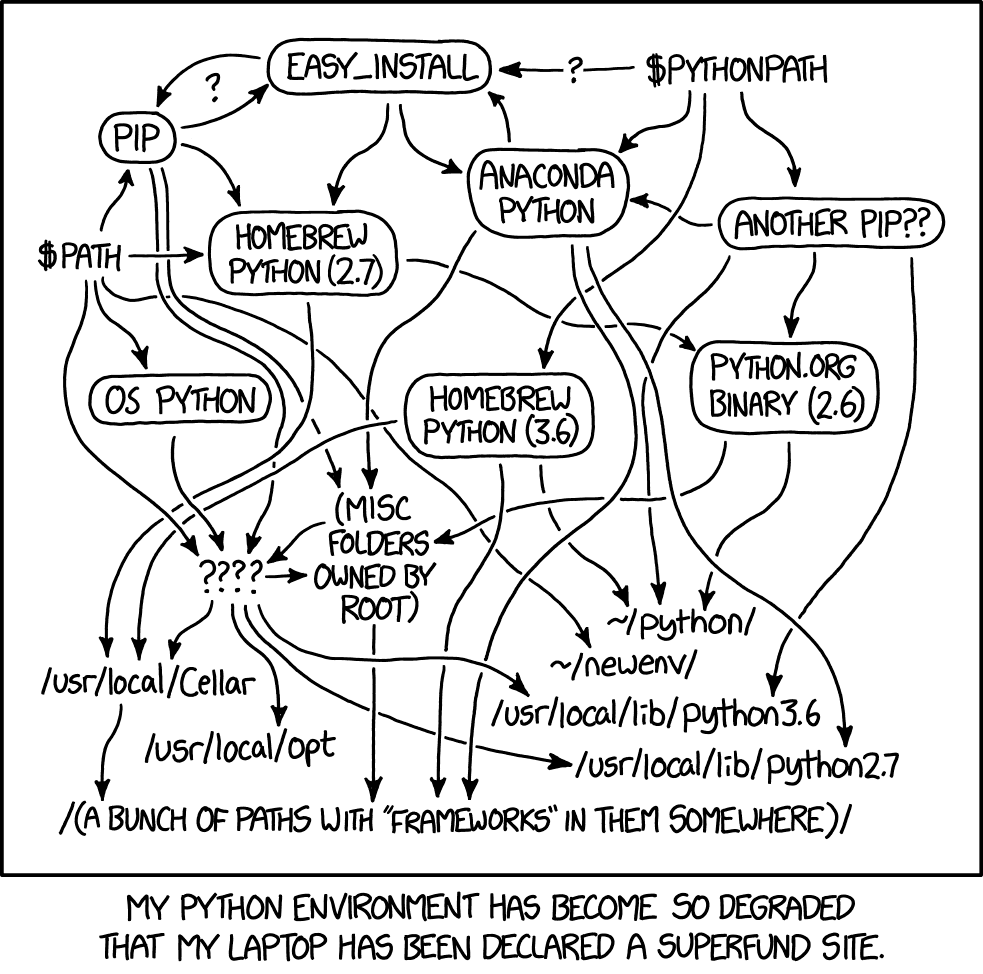
Python has the same issue. "Should one use pip, poetry, or uv? Does your toolchain matter, or are you cross-compiling?" Young asks. The model sees all these patterns with roughly equal weight, leading to unpredictable output.
Go's Five Advantages for LLMs
Young identifies five specific properties that make Go the ideal language for LLM-generated code:
1. Concurrency model. Goroutines are simple, type-safe, and ubiquitously used in the training corpus. No colored-function problem. Example:
results := make(chan string, len(urls))
for _, u := range urls {
    go func(u string) {
        resp, err := http.Get(u)
        if err != nil {
            results <- err.Error()
            return
        }
        defer resp.Body.Close()
        results <- resp.Status
    }(u)
}
for range urls {
    fmt.Println(<-results)
}
2. Standard library. net/http runs a significant portion of internet microservices. The cryptography packages are world-class. Young shipped production systems at Zoom and Keybase using only the standard library.
package main
import ( "fmt" "net/http" )
func main() { http.HandleFunc("/healthz", func(w http.ResponseWriter, r *http.Request) { fmt.Fprintln(w, "ok") }) http.ListenAndServe(":8080", nil) }
**3. Toolchain.** `gofmt`, `go vet`, and `go fix` enforce a single canonical style. `gopls` provides real-time semantic feedback. `golangci-lint` statically enforces coding styles without prompting the agent.

```bash
$ go vet ./...
./user.go:22:2: result of fmt.Errorf call not used
./user.go:38:9: declaration of "err" shadows declaration at line 34
$ golangci-lint run
user.go:51:6: exported func LoadUser should have comment (revive)
user.go:63:3: if block ends with return, drop this else (golint)
4. Performance with garbage collection. LLMs are inconsistent at managing memory. Rust's borrow checker is a constant fight for agents. C/C++ training data is full of memory bugs. Go provides native-like performance without manual memory management.
func parseLines(r io.Reader) []string {
    var out []string
    s := bufio.NewScanner(r)
    for s.Scan() {
        out = append(out, s.Text())
    }
    return out
}
5. Small, known set of footguns. Nil pointers are traceable. The set of things that can go wrong in idiomatic Go is bounded. Compare that to Python with arbitrary metaclasses.
data, err := os.ReadFile(path)
if err != nil {
    return fmt.Errorf("read config %q: %w", path, err)
}
The Rails Parallel
Young notes that Ruby on Rails produces more consistent LLM output than generic JavaScript backends. Not because Ruby is better, but because "there is essentially one Rails." Convention over configuration, which was a win for humans, is an even bigger win for machines.
Actionable Takeaway
If you're building with LLMs, consider Go for CLI tools, backend servers, and agent orchestrators. The language's low variance and consistent toolchain produce more reliable AI-generated code. As Young puts it: "Consider using Go with an agent to build the next CLI, backend server, agent orchestrator."