The AI Tool Overload Problem
Developers face a real headache. Every week brings new AI tools, each with its own API, pricing, and quirks. Switching between them eats time and creates workflow chaos. One developer decided enough was enough.
They built a centralized aggregator that pulls multiple AI services into a single web platform. It's not just another dashboard - it's an architectural response to fragmentation. The project addresses what many developers feel but few solve: how to manage the AI tool sprawl without losing your mind.
Architecture That Actually Works
The platform's architecture follows a simple but effective pattern. A central API gateway sits between the user and various AI services. This gateway handles authentication, rate limiting, and request routing. Behind it, adapters translate requests into each service's specific API format.
"The real challenge wasn't connecting to the APIs," the developer noted. "It was making them behave consistently. OpenAI expects parameters one way, Anthropic another, and Google's Gemini wants something completely different."
Normalization layers transform these differences into a common interface. Users send requests in a standard format, and the system handles the translation. It's like having a universal translator for AI services.
The Latency Tradeoff Reality
Here's where developers get skeptical. Adding layers between users and services always costs something. The aggregator introduces latency - that slight delay between request and response.
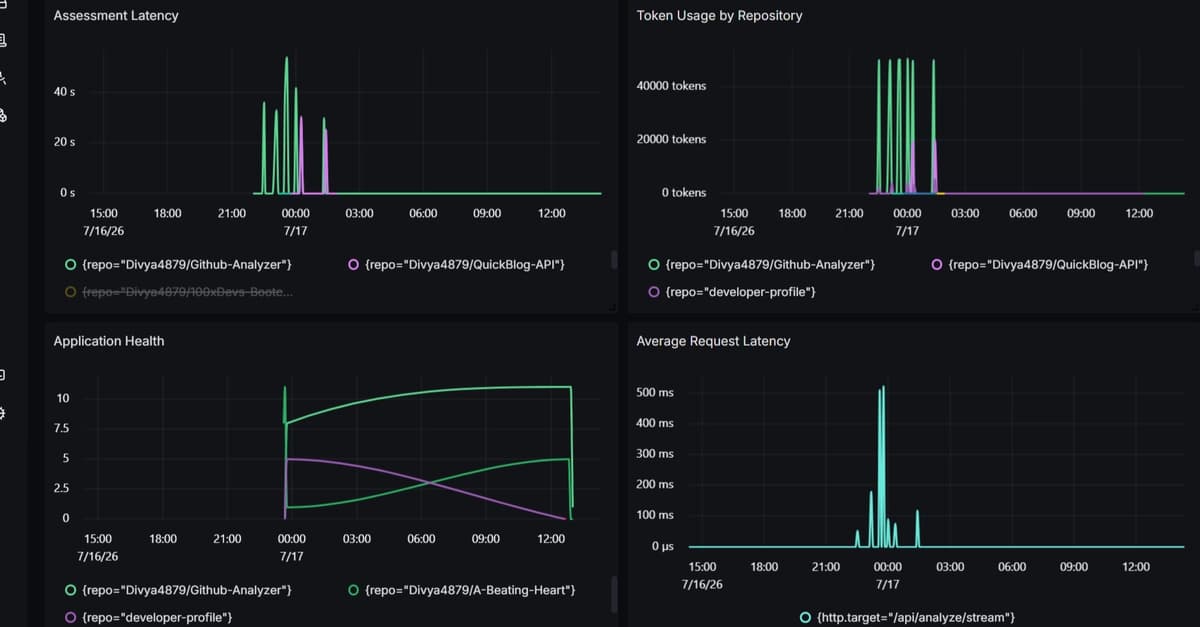
The developer measured the impact. Direct API calls to services average 200-400ms. Through the aggregator, that jumps to 350-600ms. That's the price of convenience.
"You're trading raw speed for workflow efficiency," the developer explained. "For most applications, an extra 200ms doesn't matter. For real-time systems, you'd probably skip this approach."
Caching helps. Frequently used responses get stored locally, cutting subsequent calls to under 100ms. But cache invalidation remains tricky with AI services that update constantly.
API Normalization Isn't Magic
Let's be real: API normalization sounds cleaner than it is. Each AI service has unique capabilities. Some offer image generation, others excel at coding, and a few specialize in document analysis.
The aggregator can't make services do things they weren't built for. It can only expose what's already there. The normalization layer creates the illusion of uniformity while hiding the messy reality underneath.
Developers know this illusion breaks at scale. When you need specific features from a particular service, you'll still need to understand its native API. The aggregator helps with common operations but won't replace deep integration work.
Why This Matters Now
AI tool fragmentation is getting worse, not better. New models launch weekly. Startups pivot to AI features overnight. Enterprises juggle multiple vendor relationships.
A centralized aggregator makes practical sense. It reduces cognitive load for developers working across multiple services. Teams can standardize their AI usage patterns. Cost tracking becomes centralized instead of scattered across different dashboards.
The platform also enables A/B testing between services. Want to compare how OpenAI and Anthropic handle the same prompt? The aggregator makes that trivial.
The Developer's Take
Here's the cynical view: this solves yesterday's problem. AI services are already consolidating. Major players are building their own ecosystems that lock users in. An aggregator might become irrelevant if one platform dominates.
Also, API changes break things constantly. Maintaining adapters for dozens of services becomes a full-time job. The developer admits they spend more time updating integrations than adding features.
"It's a useful tool today," they said. "But I'm not sure it's sustainable long-term. Either the services standardize, or someone builds a better aggregator that becomes the standard itself."
Practical Applications
Despite the skepticism, the platform has real uses. Content teams use it to generate variations across different AI models. Developers prototype with multiple coding assistants simultaneously. Researchers compare model outputs without manual switching.
The open-source version lets others build on the architecture. Several companies have forked it for internal AI tool management. That's the real validation - when others find your solution useful enough to adapt.
What's Next
The developer plans to add more services and improve the caching system. They're exploring ways to reduce latency through smarter routing. User feedback drives most feature decisions.
"I built this because I needed it," they said. "If others find it useful, great. If not, at least I solved my own problem."
That's the developer mindset in a nutshell. Build what you need, share it openly, and see what happens. Sometimes those personal solutions become tools everyone uses.
The Bigger Picture
This aggregator represents a shift in how we interact with AI services. Instead of mastering each tool individually, we're moving toward unified interfaces. It's similar to how cloud management platforms abstract away infrastructure details.
The approach won't work for every use case. High-frequency trading systems won't tolerate the extra latency. But for most applications, the convenience outweighs the performance cost.
As AI services multiply, aggregation becomes essential. Whether this particular implementation succeeds matters less than the pattern it establishes. Someone will solve this problem at scale. This project shows what that solution might look like.