Kennedy Space Center's Infrastructure Buckles Under Super Heavy Launch Cadence
SpaceX has informed NASA it intends to launch Starship every eight days from Launch Complex 39A at Kennedy Space Center. That's part of a broader plan: 120 Starship launches per year from Florida pads alone. Blue Origin projects the same number for New Glenn by 2035. Combined, these super heavy-lift rockets will push Kennedy's aging infrastructure past its breaking point.
A new report from the NASA Office of Inspector General (OIG), published in June 2026, details the cracks. The report covers launch facilities at Kennedy and Wallops Flight Facility, but the most striking findings center on Florida. The spaceport's roads, gas lines, and electrical grid were built for a slower era. Now, they face a surge that could exceed 365 launch and test events per year by late 2028 or 2029.
Nitrogen Shortages Already Biting
Gaseous nitrogen is critical for fueling, testing, and launching rockets. During the Artemis I campaign in 2022, supply issues emerged. They haven't gone away. According to the OIG report, the current system "cannot simultaneously support launches … of Blue Origin's New Glenn launch vehicle at Space Launch Complex 36 and United Launch Alliance's Vulcan Centaur launch vehicle at Space Launch Complex 41."
Blue Origin officials told the OIG that this created "a major scheduling challenge" during preparation for the New Glenn-1 mission that launched in January 2025. They further expressed concern that future Space Launch System (SLS) launches could trigger "1- to 2-month blackout periods from the pipeline." A new gaseous nitrogen system would cost $25 million, but the project is currently unfunded.
Roads, Power, and Pad Space
The report cites 231 miles of paved roads and bridges serving both Kennedy and Cape Canaveral Space Force Station. Super heavy rockets place more stress on these roads than smaller vehicles. The electricity distribution system for NASA's launch pads is six decades old. Both systems need upgrades that are not budgeted.
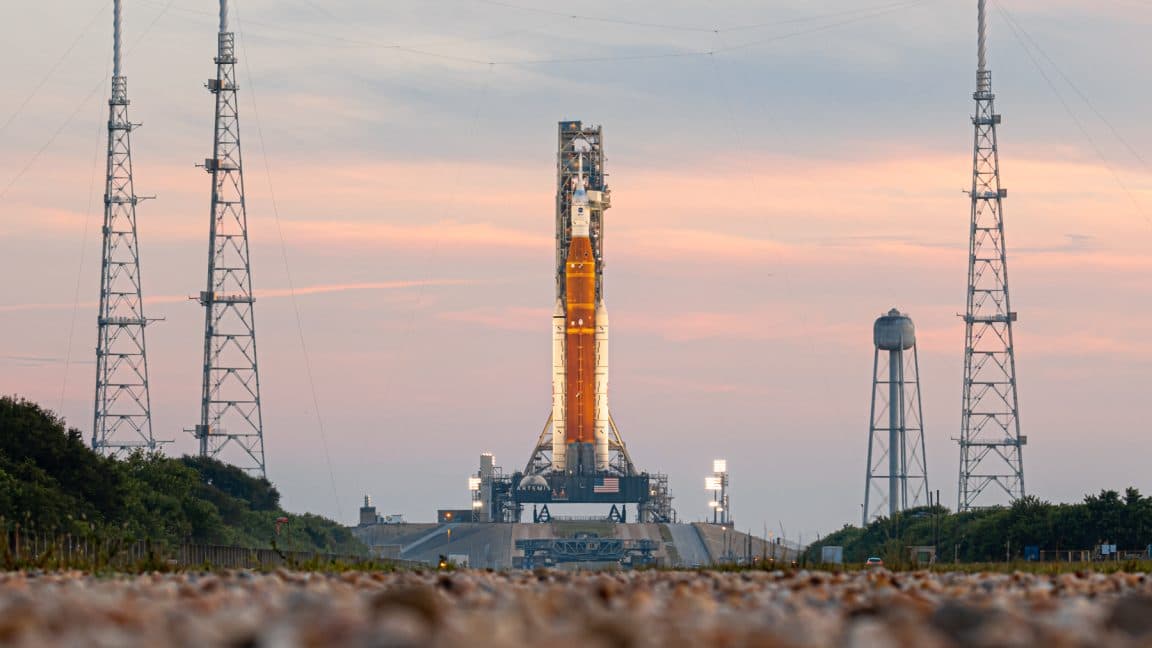
Pad space is also limited. Kennedy has four launch complexes: LC-39A (leased by SpaceX for Falcon 9/Heavy and soon Starship), LC-39B (home to SLS), LC-39C (unused due to proximity to 39B), and LC-48 (a 10-acre site for small launch vehicles). Cape Canaveral adds more pads, including LC-36A and 36B leased to Blue Origin for New Glenn.
Blue Origin has expressed interest in a third New Glenn pad north of NASA's existing pads. But the OIG report notes that the identified location is a protected wetland, requiring "lengthy and extensive federal and local review and approval processes."
Budgets Shrinking While Demand Grows
Since 2021, NASA's budgets for construction and maintenance of launch infrastructure have decreased between 11% and 47% when adjusted for inflation, the inspector general found. Existing laws make it difficult for NASA to accept contributions from commercial companies for large-scale shared infrastructure projects.
SpaceX's plan to launch Starship every eight days is driven by propellant depot needs. The report states in a footnote that "at least" 15 Starships will be required to deliver propellant for a Starship lunar lander. That kind of cadence demands reliable commodity supply, robust roads, and stable power — none of which are guaranteed under current conditions.
What This Means for Developers
For engineers building launch systems, ground software, or mission planning tools, this report signals that infrastructure bottlenecks will become a primary constraint. Launch scheduling algorithms must account for nitrogen pipeline blackouts. Ground systems need to handle variable power quality. And any software that models launch availability should include infrastructure failure modes.
If you're working on propellant depot logistics, consider the real-world limits of gas supply. The 15-Starship figure for a single lunar lander mission implies massive demand on ground infrastructure. Modeling that accurately requires data on pipeline capacity, not just launch vehicle performance.
Next Steps
NASA needs to fund the $25 million nitrogen system upgrade and find a way to accept commercial contributions for shared infrastructure. Developers should watch for updates to the OIG's recommendations and plan for infrastructure-related delays in their mission timelines. The era of super heavy rockets is here, but the spaceport isn't ready.

