The 50x Cost Advantage
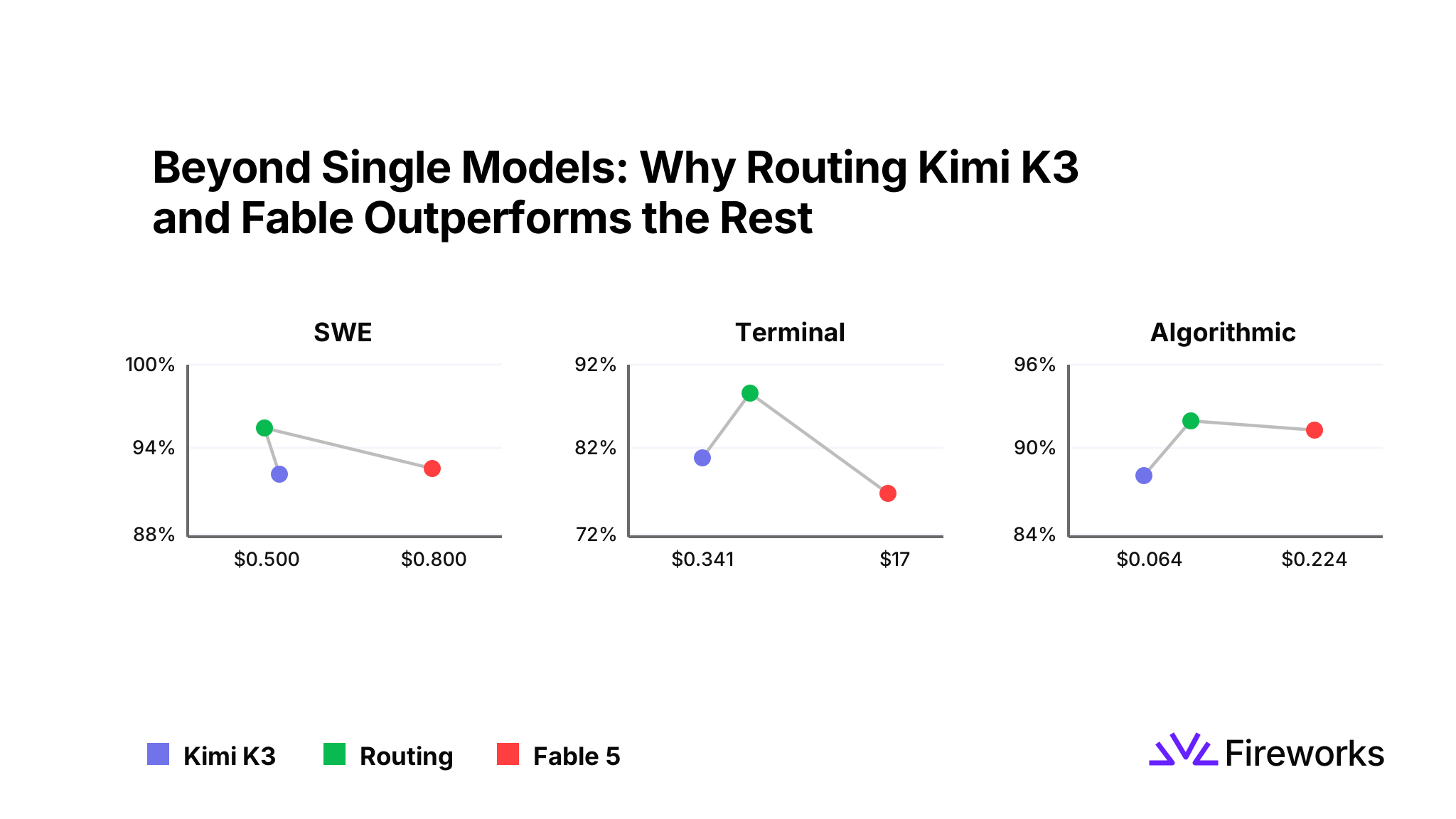
Fireworks AI ran Kimi K3 (an open model) against Fable 5 (closed) on ~1,030 agentic tasks across five categories: SWE (bug fixes), Terminal (long agentic ops), Algorithmic (LeetCode/AtCoder), Multi-Language (six languages), and Legal (lawyer-graded tasks). The headline finding: oracle routing between the two models achieves 93% accuracy, with K3 handling 72-96% of tasks, slashing costs up to 50x compared to using Fable alone.
Where Each Model Wins
On SWE-bench, K3 scores 92.4%, Fable 92.6% — essentially tied. But dig into sub-domains: K3 excels at symbolic math and dev tooling; Fable dominates web and data visualization. In multi-language tasks, Fable leads on Java, Python, C++ while K3 matches on JavaScript and Rust.
For terminal tasks (89 tasks involving security, crypto, reverse engineering), K3 solves 11 tasks Fable never cracked: 7z hash, FEAL cryptanalysis, leaked secrets, live vulnerability, runaway async jobs. Fable only has 7 solo wins.
Cost Breakdown
K3 is dramatically cheaper. On SWE, K3 uses ~55 turns and 1.3M tokens per task vs Fable's 21 turns and 130K tokens. But prompt caching makes K3's token-heavy runs cheaper overall. On terminal tasks, the roles reverse: Fable spirals to 64 turns and 1.5M tokens, often timing out. The net result: K3 is cheaper across all task families.
Why Routing Beats Any Single Model
The oracle router sends 72-96% of tasks to K3, reserving Fable for the long tail where it excels. Per-task routing always outperforms any single model. The authors argue that "the best AI no longer comes out of a single lab, it's a mixture of models." The router becomes your moat — tailored to your workload and continuously learning.
Practical Takeaway
Open models like K3 should be your default. Use a router to fall back to a premium closed model only when needed. This approach gives you frontier quality at a fraction of the cost.
Implementation Sketch
A simple router might look like:
if task_type in ['web_visualization', 'java_complex_refactor']:
    model = 'fable-5'
else:
    model = 'kimi-k3'
But a production router would learn task embeddings and model performance over time.