Factorial Raises $150M at $2.5B Valuation, Pivots to AI Workforce Platform
General Catalyst is betting on Factorial twice over. The Barcelona-based HR software company has closed a $150M Series D at a $2.5B valuation, led by General Catalyst, with participation from Atomico and Four Rivers. In a separate move, General Catalyst is committing an additional $540M through its Customer Value Fund, a vehicle that ties returns to the value Factorial creates for customers rather than equity. This structure makes General Catalyst both a shareholder and a financing partner.
The valuation marks a jump from the roughly $2B Factorial was reportedly seeking in March. The company now ranks among the most valuable AI scale-ups in Europe.
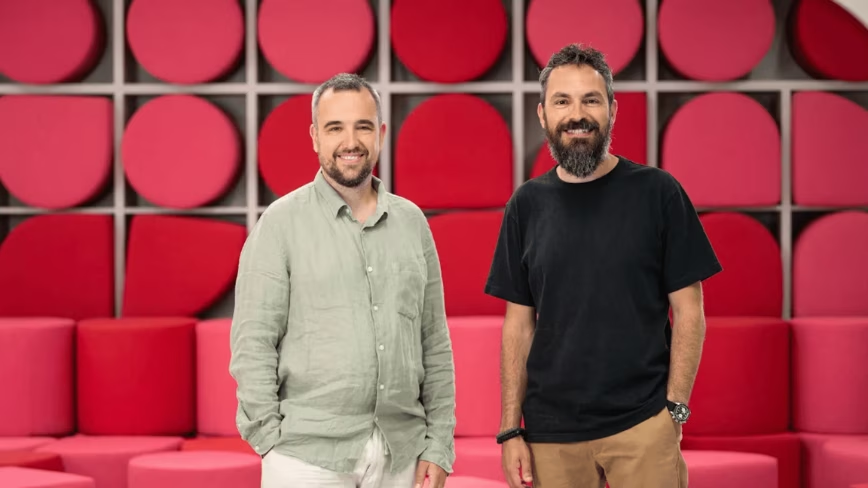
Factorial was founded in 2016 by Jordi Romero, Bernat Farrero, and Pau Ramon Revilla. It sells HR software to small and mid-sized businesses, serving over 16,000 companies across 90 countries. The company employs around 2,600 people and is hiring up to 50 staff per week. That growth rate either justifies the valuation or puts pressure on the company to deliver.
The funding round comes with a repositioning. Factorial is rebranding from a SaaS vendor to a "human-first AI Workforce Operations Platform." This mirrors a trend among enterprise software companies to reframe existing products around AI. The question is whether the AI features change what customers can do or merely change how the company pitches to investors. For now, the round is a bet, not a verdict.
Concrete plans for the money: Factorial is opening an office in Munich to target Germany's Mittelstand—the mid-market segment that is large, underserved by modern HR tools, and notoriously hard for outsiders to crack. Germany is named as the number-one international growth market.
The most novel element is General Catalyst's Customer Value Fund. The fund lends against the value a company generates for its customers, with returns tied to that value rather than dilutive equity. For Factorial, this means capital for growth and customer acquisition without giving up as much ownership as a larger equity round would require.
Technical Details
Factorial's platform includes modules for:
- Time tracking and attendance: Automated clock-in/out with integrations to payroll.
- Performance management: OKR and KPI tracking, 360-degree feedback.
- Employee onboarding: Digital document signing, task checklists.
- AI features: The company claims AI-driven insights for workforce planning, but specifics remain vague. The source does not provide code examples or API details.
Factorial's tech stack is not disclosed, but typical HR SaaS platforms use a microservices architecture, PostgreSQL for transactional data, and React for the frontend. The AI layer likely involves Python-based models for natural language processing (e.g., parsing employee feedback) and machine learning for attrition prediction.
Market Context
Factorial's valuation sits in a broader European unicorn trend. The company sells "unglamorous" HR software, not frontier AI models. This is a counterpoint to the assumption that only infrastructure startups are valuable in Europe. However, holding the $2.5B valuation depends on turning growth into a durable business before market patience runs out.
What Developers Should Know
For developers building HR or enterprise SaaS, Factorial's pivot signals that AI is becoming table stakes. If you're working on similar products, expect pressure to integrate AI features—even if the value proposition is unclear. The General Catalyst Customer Value Fund is a new financing model that could affect how startups fund customer acquisition. If you're at a startup with predictable recurring revenue, this structure might be an alternative to dilutive funding rounds.
Next Steps
- Evaluate your own product: Can you add AI features that genuinely solve customer problems, or are you just rebranding?
- Consider alternative funding: If your company has predictable revenue, explore revenue-based financing or customer value funds.
- Watch the German market: Factorial's Munich office could signal a hiring spree for engineers familiar with German compliance and language requirements.
Factorial's round is a signal that HR software is being revalued through an AI lens. Whether the valuation holds depends on execution, not announcements.