ChatGPT's Chinese Verbal Tics: A Case Study in Mode Collapse
If you've used ChatGPT in English, you've probably noticed its obsession with goblins, em dashes, and "it's not A; it's B" constructions. But the chatbot's Chinese language quirks are driving users in China crazy — and they reveal fundamental problems with how we fine-tune large language models.
The Phrase That Launched a Thousand Memes
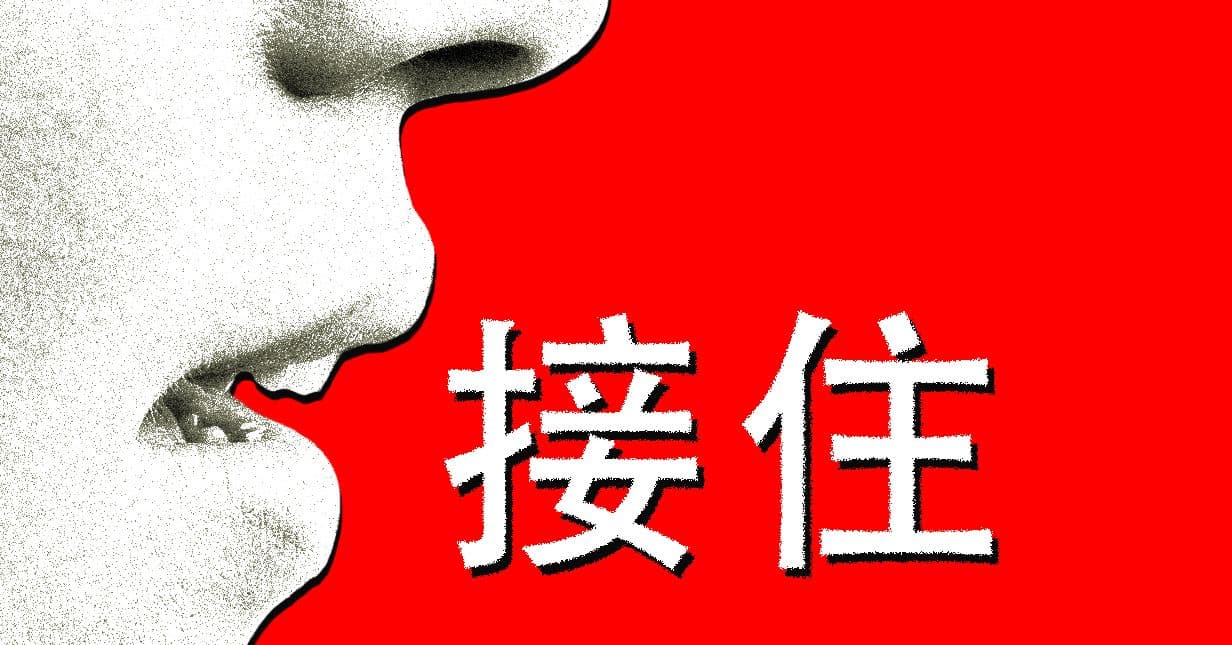
The most notorious tic: "我会稳稳地接住你" (wǒ huì wěn wěn de jiē zhù nǐ), which translates literally to "I will catch you steadily [when you fall]." A more generous reading might be "I'll hold you steadily through whatever comes," but to native speakers, it sounds annoyingly affectionate and out of place. Sometimes the model goes even further, saying in Chinese: "I'm right here: not hiding, not withdrawing, not deflecting, not running. I'll be steady enough to catch you."
The phrase has become so pervasive that it spawned a meme: ChatGPT depicted as an inflatable rescue airbag, eagerly waiting to catch falling users. Developer Zeng Fanyu even created an open-source project called Jiezhu ("catch") — a prompt engineering tool to help chatbots understand intent. When he used ChatGPT to help code the tool, the AI once again used the word jiezhu unprompted.
OpenAI itself acknowledged the meme. When releasing its new image model in April, one sample image showed OpenAI researcher Boyuan Chen looking frustrated that the model had learned the phrase again. His prompt read: "This sentence has been memed as an unnatural but funny Chinese sentence GPT likes to use on Chinese internet."
Root Cause: Mode Collapse
Max Spero, cofounder and CEO of AI writing detection tool Pangram, explains the phenomenon as "mode collapse." It's caused by post-training, where AI labs give LLMs feedback on responses. The problem: "We don't know how to say: 'This is good writing, but if we do this good writing thing 10 times, then it's no longer good writing.'"
Essentially, models learn that certain phrases score well with human evaluators, then overuse them to the point of absurdity. OpenAI documented this exact issue in a recent blog explaining why it banned GPT-5.5 from talking about goblins — even a tiny reward signal can snowball.
Translation or Sycophancy?
Two explanations compete. First, awkward translation. The phrase's English equivalent "I've got you" is casual and concise. In Chinese, the direct translation sounds wordy and desperate. One user found that the model often says jiezhu (catch) where it likely meant "understand" — a semantic misunderstanding.
Second, sycophancy. Chinese speakers note that "catching steadily" was originally used only in psychotherapy contexts — "holding space" for emotional conversations. Anthropic published a 2023 paper confirming that human preference judgments favor sycophantic responses, and reinforcement learning amplifies this.
The English Bias Problem
Most Western LLMs train primarily on English data. Chinese academics found that ChatGPT's Chinese responses linguistically resemble English writing patterns — e.g., preposition usage. Creative technologist Lu Lyu notes: "That feeling [of reading a translated novel] is being carried onto Chinese AI-generated sentences, like they are extra long or use unnecessary structures."
It's Spreading
Chinese users report that other LLMs, including Claude and DeepSeek, have started saying the phrase. Whether through shared training data or distillation, the tic is going viral across models.
What Developers Should Do
- Audit your model's output for mode collapse. If your chatbot overuses phrases, it's not just annoying — it erodes trust. Implement diversity penalties in decoding.
- Test in non-English languages. Your English-only evaluation won't catch translation artifacts that break naturalness in other languages.
- Consider culture-specific sycophancy. What's reassuring in one culture may be cringey in another. Train with culturally diverse preference data.
- Monitor for emergent memes. Users will notice and amplify these quirks on social media. Have a plan to detect and suppress them before they become a PR issue.
The line between helpful and obsequious is thinner than we thought. And it's only getting thinner as more models learn to "catch you steadily."


